Hidden History Uncovered

Explore St. Louis' past through engaging road trip vlogs and untold stories with Don M. Kaiser.

Explore St. Louis history through captivating road trip vlogs.

A large, iconic arch stands prominently in a bustling public area filled with people walking and gathering. Bright green trees line the area alongside advertisements visible on a red tour bus. The sky is partially cloudy, casting soft shadows on the scene below.

Why was St. Louis Babe Ruth's Favorite City to Visit?

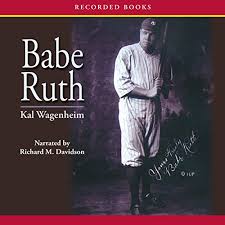
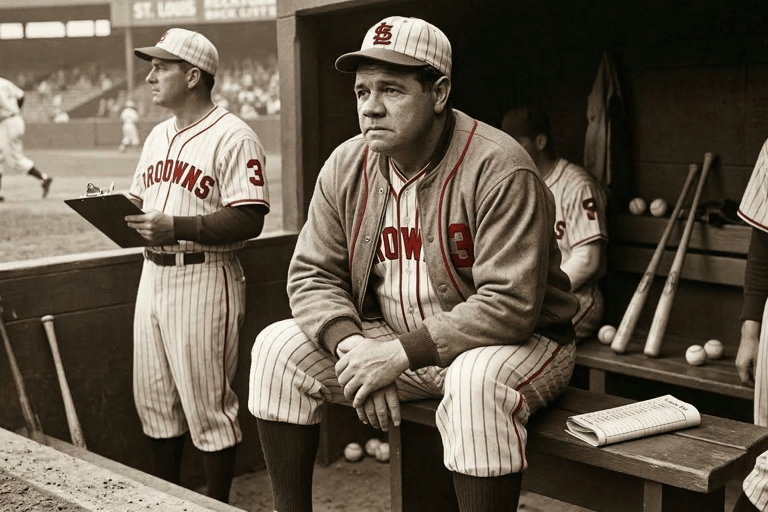
"The Babe" played 22 MLB seasons from 1914-1935. And in each of those seasons, he was in St. Louis at least twice a year. Back then, St. Louis was a two-team baseball town: The Browns in the American League and the Cardinals in the National League. If the Yankees, played the Cardinals in the World Series, which happened twice during Babe's time, he was in St. Louis even more often.

For a guy who was from Baltimore and played his entire career on the East Coast with Boston and New York, he was not shy about singing the praises of St. Louis. In this first episode on Babe Ruth's St. Louis I explore why.

This is the Highway Farty inaugural, the very first of what I hope to be many walks and drives through the quirky and often sordid history of St. Louis.

I take you on a leisurely stroll around the neighborhood that used to be Sportsman's Park, home of both the Browns and the Cardinals and, along the way, tell stories about the Babe's history in St. Louis.

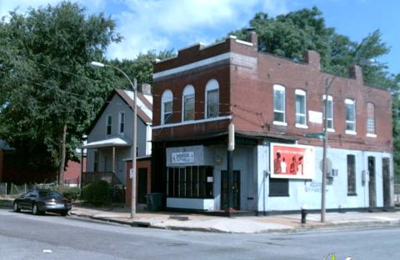
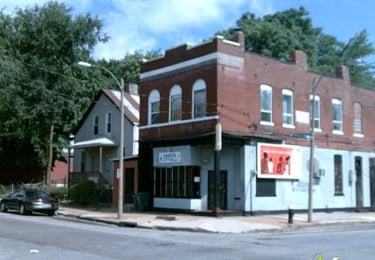
One landmark I neglected to point out in the video (mainly because I have a tendency to get off track) is visible starting at approximately the 16:04 mark. It's the site of what was, from 1933-1966, Palermo's Tavern, at the corner of Sullivan & Spring, in the shadows of the left field grandstand of Sportsman's Park.

Today it is still a bar called Valerie's Sit & Sip.

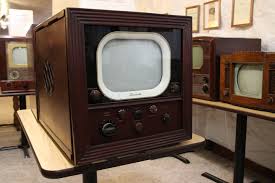
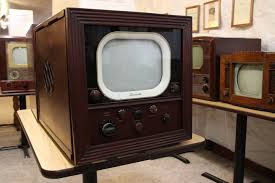
As for the claim it was America's first true sports bar, that comes from proprietor Jimmy Palermo's family...but with good reason: Back in 1947, Jimmy saw the power of the new medium television, as it related to sports; he bought one of the earliest television sets (a substantial investment at the time,) mounted it above the bar and drew throngs of new customers eager to watch boxing matches on his TV. Back then, boxing was the first sport to lend itself especially well to television.

In short order, other sports would follow suit and Jimmy Palermo's became a destination for fans eager to drink beer and watch sports and do so in an environment chock full of sports memorabilia.

I'll let Fox news pick up the story of Jimmy Palermo. A few years ago, it featured him here in its digital series "Meet the American Who..."

When Spring Training was just "Down South" Somewhere

In this episode, I share a story from a long out-of-print biography of Babe Ruth that has The Bambino changing trains at St. Louis Union Station en-route to Yankees Spring Training in Hot Springs, Arkansas. Because he was so heavy, Babe needed a few weeks' head start on his teammates to whip himself into decent enough shape to even train with the other guys.

Today we associate Spring Training with the highly coordinated Grapefruit League in Florida and the Cactus League in Arizona. But those are relatively recent developments in baseball history.

In the early days of baseball, teams just headed south to wherever they could find a suitable field in a warm-enough climate to train and play intra-squad games.

The Yankees are strongly associated with Hot Springs and today the city pays homage to its baseball history and especially to Babe Ruth with this statue:

A look at Cardinals history, on the other hand, shows a team training all over the map. The Cardinals first true Spring Training site was in Dallas in 1903, followed by Houston in 1904.

It really wasn't until the late 1930's that the Cards settled on Florida. But interestingly enough, from 1943-1945, they trained in balmy Cairo.

Illinois, that is. And pronounced Karo, like the syrup.

In those years, the St. Louis Browns trained in an unlikely place, as well: Cape Girardeau, Missouri.

It all had to do with World War II and travel restrictions imposed by the United States government to conserve valuable wartime commodities such as rubber for tires and petroleum fuel.

In keeping with the spirit of my little history project here, I don't want to just hear Cairo or Cape Girardeau. I want to go see exactly where the teams trained. I've put those two places on my list of Highway Farty roadtrips.

Cairo, which featured so prominently in Mark Twain's writing, is today considered a modern Midwest industrial ghost town.

Needless to say, it has my name written all over it!!!!

H.F. Episode #1

H.F. Episode #2

H.F. Episode #3

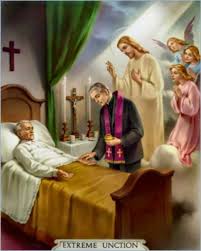
I never dreamed a story about Babe Ruth would lead me to Mary Magdalene and a discussion about the importance of the Sacrament of Extreme Unction-aka Last Rites-of the Catholic Church.

But stick with me....I'll bring it all back home.

I promise!

But first let's talk a bit about the somewhat unusual statue of Mary Magdalene I featured in the video. Sorry, but I just think it looks a bit askew. Don't know what it is about it, maybe the head, maybe the neck. And I know I can't be the only one.

It will not be the first controversial statue I feature in the stories on this channel.

That said, let me just tell what I know about it--which is not much. Not for something so recently installed.

It was placed out front of St. Mary Magdalene Parish in Brentwood in 2017.

It was sculpted from a 10,000 pound block of limestone by a local artist named Abraham Mohler.

And it was paid for entirely by private donations...the sum of which I've not been able to find. Because it was privately funded and commissioned, I suppose the cost is not important if the message it conveys is powerful. And that it is.

It depicts Mary Magdalene, often called the Apostle of Apostles because she was the first to discover Christ's Resurrection and announce it to the others.

Her face conveys sorrow, reverence and hope at the feet of Jesus.

She is holding her trademark alabaster jar of oil to anoint the forehead and feet of Christ.

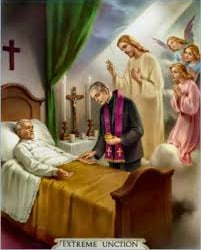
Take it from a mediocre Catholic....the role of anointing the sick and dying is a big deal in our Church. If not for the sick and dying, but for those of us who live on.

I'll first share a personal story of the power of anointing and conclude with one from history. Of course, history with a St. Louis connection!

When my Dad was dying, I didn't want to leave his bedside and miss that moment. And my cell phone was not getting a signal in the room we were in. At that moment, at just the right time, the wonderful non denominational Chaplain from the Hospice agency arrived. I'll never forget what he said to me:

Your father is being taken care of in God's hands. Is there anything I can do for YOU?

Yes, I said. I need to get a Priest but my cell phone is not working.

Consider it done, he said.

Within minutes a Monsignor arrived. Later in a burst of "My father can beat your father" that only Catholics can understand, some of his friends were in awe....He got a MONSIGNOR?

Before the Monsignor started, I introduced him to my father, who was deep in the fog of dementia and had been for years.

"Dad," I said. "I've called a Priest because it's time and I want to be sure you join Mom in a State of Grace. Is that OK?"

And then the most unusual thing happened: He squeezed my hand and the fog lifted. With clear eyes and the deep clear voice from long ago he said "Yes, thank you."

With that the rites commenced and he soon passed.

The comfort I felt knowing he went forward spiritually prepared is indescribable.

Such is the importance of the Last Rites to us Catholics.

When President Kennedy was mortally wounded in Parkland Hospital in Dallas, everybody knew he was gone. Reports of the President's death made their way through the halls of the hospital and the press was clamoring for official confirmation.

And yet, Kennedy's Press Secretary Malcom Kilduff was hedging. "We just don't know," he said, even though he certainly knew--the President had a sheet pulled up over his badly mangled head.

Why was Kilduff so unwilling to acknowledge the obvious?

It would provide fodder for conspiracy theorists for decades to come, but the answer was quite simple: They were still waiting on the priest Mrs. Kennedy requested.

Shortly thereafter the parish priest from a Dallas church near the hospital arrived. He pulled back the sheet, anointed the President's head and hands and followed with words that would bring Mrs. Kennedy a lifetime of comfort.

She wanted to know if the Priest got to Mr. Kennedy in time--meaning were the Last Rites administered while the President still had life in him?

Yes, the Priest said, careful to not lie to the First Lady but compassionate enough to assuage her...I know his Soul was still in his body when I got to him.

Mrs. Kennedy breathed a sigh of relief. It was the loophole this fast-thinking Priest needed to put her at ease.

Who was this Priest, who an hour earlier was just going about his daily routine as a local Pastor, without knowing he would play such an important part in history?

His name was Father Oscar Huber.

And yep....he was from St. Louis. And we will return to him in a future episode.

But now...back to Babe Ruth.

Bright living room with modern inventory

H.F. Episode #4

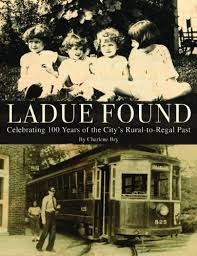
For being so small, so rich and so seemingly boring...Ladue sure has a lot of dirty laundry to air.

One of my goals in writing these articles beneath each episode is to have a place to include little side details I couldn't get into on the video.

Usually they're stories that don't have enough meat to serve as a main course. But the trouble with Ladue is every story I thought might serve as an interesting sidebar actually had enough to stand alone as its own segment.

We'll be back in Ladue often because there's so much material.

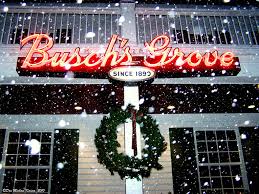
One thing I neglected to mention in my discussion of Busch's Grove was the prohibition on women in the bar. Except for New Year's Eve...women were not allowed in the Men's Bar.

And that's just the way it was for most of its existence, going all the way back to 1890.

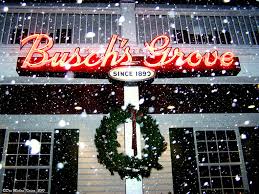
In the video, I did mention something that bears repeating here, because so many in St. Louis were confused by the name: Busch's Grove had nothing to do with the Anheuser-Busch families.

The Busch in Busch's Grove refers to John Busch, the postmaster in the area in the 1890's. He expanded the operation from a small post office and store into a full-fledged way station, restaurant and bar.

When Busch got out of it, he sold the operation to the Kammerer Brothers in 1916. But thePaul re is one eery commonality between the two families: Both were stung by high profile suicides.

Since I can't say the word suicide in my You Tube videos without getting a restriction, I'll discuss it here:

The Busch Beer family has had a number of suicides and I'll handle those in a separate episode.

But on the morning of July 11, 1951, St. Louis awoke to the shocking news that Paul Kammerer, the celebrated proprietor of Busch's Grove, jumped out of the bathroom window on the 16th Floor of the Congress Hotel in the wee hours of the morning.

It would be a while before a passer-by found him splattered near the curb on Pershing Avenue, wearing only a bathrobe. Inside his luxurious apartment, police would only find a tipped-over chair in the bathtub, which he obviously had used to reach the window.

There was no suicide note and restaurant staff at Busch's Grove reported he seemed perfectly normal and cheerful earlier in the day.

The only thing his shocked family could come up with was that the 70-year-old had been quietly despondent over the death of his wife two years earlier.

The Congress and its twin apartment building, the Senate, are still standing in good repair along Union Boulevard, bordering Forest Park.

We will definitely return to them, as one of the most famous St. Louisans in history lived there.

As for Paul Kammerer, his family would continue to run Busch's Grove until ....

The Kammerer Suicide was certainly the most well-known building leap until October 28, 2020 when well-known personal injury attorney Ed Brown jumped to his death from his office on the 11th Floor of One Memorial Drive

As Ed Brown always pointed out in his television commercials....he was the lawyer with the eye patch.

There wasn't much mystery as to why he killed himself: He left a statement that he was sick and dying of an undisclosed terminal illness.

H.F. Episode #5

Finally found it!

And yes, it's disappointing to finally find a location and discover nothing there but a vacant lot.

That's just one of the things I've gotten used to when I go looking forwhere something happened, instead of just being satisfied that something happened in a particular area.

I don't just want to know the address--I want to know which window to look in.

For me, I can crystalize history more by going to where it happened...even if it's just a vacant lot...as opposed to just reading an account.

Not to get too new agey....there's power in the soil.

Not buying it?

Go visit the Antietam Battlefield in Sharpsburg, Maryland early in the morning and you'll see what I mean.

In this case, my quest was not nearly as dramatic and the ground not nearly as hallowed. But, after watching the video, tell me you won't at least think about it next time you shop at the St. Louis Ikea!

I'm talking about Babe Ruth's favorite whorehouse, which so happened to be in my hometown, St. Louis, right across the street from the Ikea.

I know it's kind of weird to start a St. Louis history channel with a bunch of Babe Ruth stories, but for me it makes pefect sense because the whole idea for this channel was conceived (as an old fashioned blog) in that whorehouse.

About 15 years ago, I started seeing a slew of new stories about Babe Ruth's sexual exploits. The guy really was like JFK--everyone knew about his adventures, even at the time they were happening, but so few things were written. Until these new stories came out, that is.

One story, in particular, was on Deadspin and creatively titled The Sultan of Twat.

There's an art to headline writing. And if done well it makes the reader chuckle and click, as Deadspin did here with its clever play on words. The twat was just titilating enough to make me want to go deeper into it.

OK, I'll stop now.

But all of these stories, or in the Deadspin case, the underlying book it was reviewing, would inevitably get around to Babe Ruth's adventures in St. Louis.

He really just liked to come here and he came here often.

But every story seemed to stop just short of telling me where. Yes, yes, St. Louis. But where in St. Louis--exactly?

And so, I suppose my obsession was born. I began looking for the address and the more I looked, the more hidden details I uncovered along the way.

I bought up any written material I could find related to Babe Ruth or those associated with him--even paid a small fortune for a 1948 pamphlet published by his old Yankees road-roommate, Waite Hoyt.

Hoyt was one of many former roomies who allegedly said "I never roomed with Babe Ruth--only his suitcase." Or something to that effect, because Babe was always out carousing.

I got carried away and bought the Waite Hoyt pamphlet/magazine before I realized it was available free online through the Library of Congress.

That was also before I learned my library card afforded me full and free access to the newspapers.com database through the St. Louis County Library research portal.

There are other databases available, as well. Just log-in, drop down to the alphabetical list of digital resources and click on the letter "N."

Once I learned what was available to me free--even from my personal computer--it opened up a whole new world that lets me find some of the hidden locations I visit in these stories.

There's no secret to it, really. And back in those days, reporters were not shy about listing exact addresses--none of this 95-hundred-block of Olive Blvd. stuff we are accustomed to seeing today.

The one caveat I will mention is this; For whatever reason, the Post-Dispatch gets a bit wonky and requires visits to a few different databases to get the full archive.

Thankfully, from 1852 until 1986 we had the St. Louis Globe-Democrat. And that resource provides me most everything I need to find what I'm looking for.

And on the subject of Babe Ruth and his favorite "bawdy house," as they called it back then, the old (1884-1951) St. Louis Star-Times gave me what I called the keys to the kingdom.

St. Louis really was a fantastic newspaper town with top-notch reporters. We will visit some of them in the future stories I've roughed out.

Bright living room with modern inventory

H.F. Episode #6

This is the first of a segment I will include from time to time called Driving St. Louis.

Not that there's anything especially difficult about driving here, other than the horribly maintained roads and lack of enforcement of traffic laws, most notably running red lights.

The purpose of these segments is simply to show the things along the road.

I know it sounds strange but whenever I watch an old police show or movie on TV, I find myself paying more attention to what's going on in the background on the streets and sidewalks.

This assumes, of course, that the show was shot on location. Old shows like The Rockford Files, Adam-12, Dragnet, Emergency!, The Streets of San Francisco and Hawaii 5-0 do this particularly well.

I could go on. Even the more recent shows like Law & Order offer viewers a rare opportunity to see what a city looked like at that moment in time.

It's the cars, the signs, the shops...even things like phone booths....that interest me.

So, by running my new dash cam from time to time, I'm hoping to capture a little of that here in St. Louis.

I know it adds length to the stories, so I'll try to be sparing in how I use it. And once in a while, I'll devote an entire segment to a drive on a particular road.

Do I think it's particularly interesting now? No. But in twenty or thirty years, if these videos live-on in some form, viewers will be able to watch a good long-run of what Lindbergh or Olive or Manchester looked like in 2025 and 2026.

Just the other day, while eating breakfast at the Olivette McDonald's on Dielman & Olive, a regular group of us old-timers was trying to recall what used to be on the Northeast corner of that intersection--where a Walgreen's sits today.

None of us could come up with it.

Had I been able to launch a video drive down Olive from say, 1973, I'd have had my answer.

I'd have also seen the Imperial gas station just down the street on the North side of Olive.

Explore St. Louis history through captivating road trip vlogs.

A large, iconic arch stands prominently in a bustling public area filled with people walking and gathering. Bright green trees line the area alongside advertisements visible on a red tour bus. The sky is partially cloudy, casting soft shadows on the scene below.

Why was St. Louis Babe Ruth's Favorite City to Visit?

"The Babe" played 22 MLB seasons from 1914-1935. And in each of those seasons, he was in St. Louis at least twice a year. Back then, St. Louis was a two-team baseball town: The Browns in the American League and the Cardinals in the National League. If the Yankees, played the Cardinals in the World Series, which happened twice during Babe's time, he was in St. Louis even more often.

For a guy who was from Baltimore and played his entire career on the East Coast with Boston and New York, he was not shy about singing the praises of St. Louis. In this first episode on Babe Ruth's St. Louis I explore why.

This is the Highway Farty inaugural, the very first of what I hope to be many walks and drives through the quirky and often sordid history of St. Louis.

I take you on a leisurely stroll around the neighborhood that used to be Sportsman's Park, home of both the Browns and the Cardinals and, along the way, tell stories about the Babe's history in St. Louis.

One landmark I neglected to point out in the video (mainly because I have a tendency to get off track) is visible starting at approximately the 16:04 mark. It's the site of what was, from 1933-1966, Palermo's Tavern, at the corner of Sullivan & Spring, in the shadows of the left field grandstand of Sportsman's Park.

Today it is still a bar called Valerie's Sit & Sip.

As for the claim it was America's first true sports bar, that comes from proprietor Jimmy Palermo's family...but with good reason: Back in 1947, Jimmy saw the power of the new medium television, as it related to sports; he bought one of the earliest television sets (a substantial investment at the time,) mounted it above the bar and drew throngs of new customers eager to watch boxing matches on his TV. Back then, boxing was the first sport to lend itself especially well to television.

In short order, other sports would follow suit and Jimmy Palermo's became a destination for fans eager to drink beer and watch sports and do so in an environment chock full of sports memorabilia.

I'll let Fox news pick up the story of Jimmy Palermo. A few years ago, it featured him here in its digital series "Meet the American Who..."

When Spring Training was just "Down South" Somewhere

In this episode, I share a story from a long out-of-print biography of Babe Ruth that has The Bambino changing trains at St. Louis Union Station en-route to Yankees Spring Training in Hot Springs, Arkansas. Because he was so heavy, Babe needed a few weeks' head start on his teammates to whip himself into decent enough shape to even train with the other guys.

Today we associate Spring Training with the highly coordinated Grapefruit League in Florida and the Cactus League in Arizona. But those are relatively recent developments in baseball history.

In the early days of baseball, teams just headed south to wherever they could find a suitable field in a warm-enough climate to train and play intra-squad games.

The Yankees are strongly associated with Hot Springs and today the city pays homage to its baseball history and especially to Babe Ruth with this statue:

A look at Cardinals history, on the other hand, shows a team training all over the map. The Cardinals first true Spring Training site was in Dallas in 1903, followed by Houston in 1904.

It really wasn't until the late 1930's that the Cards settled on Florida. But interestingly enough, from 1943-1945, they trained in balmy Cairo.

Illinois, that is. And pronounced Karo, like the syrup.

In those years, the St. Louis Browns trained in an unlikely place, as well: Cape Girardeau, Missouri.

It all had to do with World War II and travel restrictions imposed by the United States government to conserve valuable wartime commodities such as rubber for tires and petroleum fuel.

In keeping with the spirit of my little history project here, I don't want to just hear Cairo or Cape Girardeau. I want to go see exactly where the teams trained. I've put those two places on my list of Highway Farty roadtrips.

Cairo, which featured so prominently in Mark Twain's writing, is today considered a modern Midwest industrial ghost town.

Needless to say, it has my name written all over it!!!!

H.F. Episode #1

H.F. Episode #2

H.F. Episode #3

I never dreamed a story about Babe Ruth would lead me to Mary Magdalene and a discussion about the importance of the Sacrament of Extreme Unction-aka Last Rites-of the Catholic Church.

But stick with me....I'll bring it all back home.

I promise!

But first let's talk a bit about the somewhat unusual statue of Mary Magdalene I featured in the video. Sorry, but I just think it looks a bit askew. Don't know what it is about it, maybe the head, maybe the neck. And I know I can't be the only one.

It will not be the first controversial statue I feature in the stories on this channel.

That said, let me just tell what I know about it--which is not much. Not for something so recently installed.

It was placed out front of St. Mary Magdalene Parish in Brentwood in 2017.

It was sculpted from a 10,000 pound block of limestone by a local artist named Abraham Mohler.

And it was paid for entirely by private donations...the sum of which I've not been able to find. Because it was privately funded and commissioned, I suppose the cost is not important if the message it conveys is powerful. And that it is.

It depicts Mary Magdalene, often called the Apostle of Apostles because she was the first to discover Christ's Resurrection and announce it to the others.

Her face conveys sorrow, reverence and hope at the feet of Jesus.

She is holding her trademark alabaster jar of oil to anoint the forehead and feet of Christ.

Take it from a mediocre Catholic....the role of anointing the sick and dying is a big deal in our Church. If not for the sick and dying, but for those of us who live on.

I'll first share a personal story of the power of anointing and conclude with one from history. Of course, history with a St. Louis connection!

When my Dad was dying, I didn't want to leave his bedside and miss that moment. And my cell phone was not getting a signal in the room we were in. At that moment, at just the right time, the wonderful non denominational Chaplain from the Hospice agency arrived. I'll never forget what he said to me:

Your father is being taken care of in God's hands. Is there anything I can do for YOU?

Yes, I said. I need to get a Priest but my cell phone is not working.

Consider it done, he said.

Within minutes a Monsignor arrived. Later in a burst of "My father can beat your father" that only Catholics can understand, some of his friends were in awe....He got a MONSIGNOR?

Before the Monsignor started, I introduced him to my father, who was deep in the fog of dementia and had been for years.

"Dad," I said. "I've called a Priest because it's time and I want to be sure you join Mom in a State of Grace. Is that OK?"

And then the most unusual thing happened: He squeezed my hand and the fog lifted. With clear eyes and the deep clear voice from long ago he said "Yes, thank you."

With that the rites commenced and he soon passed.

The comfort I felt knowing he went forward spiritually prepared is indescribable.

Such is the importance of the Last Rites to us Catholics.

When President Kennedy was mortally wounded in Parkland Hospital in Dallas, everybody knew he was gone. Reports of the President's death made their way through the halls of the hospital and the press was clamoring for official confirmation.

And yet, Kennedy's Press Secretary Malcom Kilduff was hedging. "We just don't know," he said, even though he certainly knew--the President had a sheet pulled up over his badly mangled head.

Why was Kilduff so unwilling to acknowledge the obvious?

It would provide fodder for conspiracy theorists for decades to come, but the answer was quite simple: They were still waiting on the priest Mrs. Kennedy requested.

Shortly thereafter the parish priest from a Dallas church near the hospital arrived. He pulled back the sheet, anointed the President's head and hands and followed with words that would bring Mrs. Kennedy a lifetime of comfort.

She wanted to know if the Priest got to Mr. Kennedy in time--meaning were the Last Rites administered while the President still had life in him?

Yes, the Priest said, careful to not lie to the First Lady but compassionate enough to assuage her...I know his Soul was still in his body when I got to him.

Mrs. Kennedy breathed a sigh of relief. It was the loophole this fast-thinking Priest needed to put her at ease.

Who was this Priest, who an hour earlier was just going about his daily routine as a local Pastor, without knowing he would play such an important part in history?

His name was Father Oscar Huber.

And yep....he was from St. Louis. And we will return to him in a future episode.

But now...back to Babe Ruth.

Bright living room with modern inventory

H.F. Episode #4

For being so small, so rich and so seemingly boring...Ladue sure has a lot of dirty laundry to air.

One of my goals in writing these articles beneath each episode is to have a place to include little side details I couldn't get into on the video.

Usually they're stories that don't have enough meat to serve as a main course. But the trouble with Ladue is every story I thought might serve as an interesting sidebar actually had enough to stand alone as its own segment.

We'll be back in Ladue often because there's so much material.

One thing I neglected to mention in my discussion of Busch's Grove was the prohibition on women in the bar. Except for New Year's Eve...women were not allowed in the Men's Bar.

And that's just the way it was for most of its existence, going all the way back to 1890.

In the video, I did mention something that bears repeating here, because so many in St. Louis were confused by the name: Busch's Grove had nothing to do with the Anheuser-Busch families.

The Busch in Busch's Grove refers to John Busch, the postmaster in the area in the 1890's. He expanded the operation from a small post office and store into a full-fledged way station, restaurant and bar.

When Busch got out of it, he sold the operation to the Kammerer Brothers in 1916. But thePaul re is one eery commonality between the two families: Both were stung by high profile suicides.

Since I can't say the word suicide in my You Tube videos without getting a restriction, I'll discuss it here:

The Busch Beer family has had a number of suicides and I'll handle those in a separate episode.

But on the morning of July 11, 1951, St. Louis awoke to the shocking news that Paul Kammerer, the celebrated proprietor of Busch's Grove, jumped out of the bathroom window on the 16th Floor of the Congress Hotel in the wee hours of the morning.

It would be a while before a passer-by found him splattered near the curb on Pershing Avenue, wearing only a bathrobe. Inside his luxurious apartment, police would only find a tipped-over chair in the bathtub, which he obviously had used to reach the window.

There was no suicide note and restaurant staff at Busch's Grove reported he seemed perfectly normal and cheerful earlier in the day.

The only thing his shocked family could come up with was that the 70-year-old had been quietly despondent over the death of his wife two years earlier.

The Congress and its twin apartment building, the Senate, are still standing in good repair along Union Boulevard, bordering Forest Park.

We will definitely return to them, as one of the most famous St. Louisans in history lived there.

As for Paul Kammerer, his family would continue to run Busch's Grove until ....

The Kammerer Suicide was certainly the most well-known building leap until October 28, 2020 when well-known personal injury attorney Ed Brown jumped to his death from his office on the 11th Floor of One Memorial Drive

As Ed Brown always pointed out in his television commercials....he was the lawyer with the eye patch.

There wasn't much mystery as to why he killed himself: He left a statement that he was sick and dying of an undisclosed terminal illness.

H.F. Episode #5

Finally found it!

And yes, it's disappointing to finally find a location and discover nothing there but a vacant lot.

That's just one of the things I've gotten used to when I go looking forwhere something happened, instead of just being satisfied that something happened in a particular area.

I don't just want to know the address--I want to know which window to look in.

For me, I can crystalize history more by going to where it happened...even if it's just a vacant lot...as opposed to just reading an account.

Not to get too new agey....there's power in the soil.

Not buying it?

Go visit the Antietam Battlefield in Sharpsburg, Maryland early in the morning and you'll see what I mean.

In this case, my quest was not nearly as dramatic and the ground not nearly as hallowed. But, after watching the video, tell me you won't at least think about it next time you shop at the St. Louis Ikea!

I'm talking about Babe Ruth's favorite whorehouse, which so happened to be in my hometown, St. Louis, right across the street from the Ikea.

I know it's kind of weird to start a St. Louis history channel with a bunch of Babe Ruth stories, but for me it makes pefect sense because the whole idea for this channel was conceived (as an old fashioned blog) in that whorehouse.

About 15 years ago, I started seeing a slew of new stories about Babe Ruth's sexual exploits. The guy really was like JFK--everyone knew about his adventures, even at the time they were happening, but so few things were written. Until these new stories came out, that is.

One story, in particular, was on Deadspin and creatively titled The Sultan of Twat.

There's an art to headline writing. And if done well it makes the reader chuckle and click, as Deadspin did here with its clever play on words. The twat was just titilating enough to make me want to go deeper into it.

OK, I'll stop now.

But all of these stories, or in the Deadspin case, the underlying book it was reviewing, would inevitably get around to Babe Ruth's adventures in St. Louis.

He really just liked to come here and he came here often.

But every story seemed to stop just short of telling me where. Yes, yes, St. Louis. But where in St. Louis--exactly?

And so, I suppose my obsession was born. I began looking for the address and the more I looked, the more hidden details I uncovered along the way.

I bought up any written material I could find related to Babe Ruth or those associated with him--even paid a small fortune for a 1948 pamphlet published by his old Yankees road-roommate, Waite Hoyt.

Hoyt was one of many former roomies who allegedly said "I never roomed with Babe Ruth--only his suitcase." Or something to that effect, because Babe was always out carousing.

I got carried away and bought the Waite Hoyt pamphlet/magazine before I realized it was available free online through the Library of Congress.

That was also before I learned my library card afforded me full and free access to the newspapers.com database through the St. Louis County Library research portal.

There are other databases available, as well. Just log-in, drop down to the alphabetical list of digital resources and click on the letter "N."

Once I learned what was available to me free--even from my personal computer--it opened up a whole new world that lets me find some of the hidden locations I visit in these stories.

There's no secret to it, really. And back in those days, reporters were not shy about listing exact addresses--none of this 95-hundred-block of Olive Blvd. stuff we are accustomed to seeing today.

The one caveat I will mention is this; For whatever reason, the Post-Dispatch gets a bit wonky and requires visits to a few different databases to get the full archive.

Thankfully, from 1852 until 1986 we had the St. Louis Globe-Democrat. And that resource provides me most everything I need to find what I'm looking for.

And on the subject of Babe Ruth and his favorite "bawdy house," as they called it back then, the old (1884-1951) St. Louis Star-Times gave me what I called the keys to the kingdom.

St. Louis really was a fantastic newspaper town with top-notch reporters. We will visit some of them in the future stories I've roughed out.

Bright living room with modern inventory

H.F. Episode #6

This is the first of a segment I will include from time to time called Driving St. Louis.

Not that there's anything especially difficult about driving here, other than the horribly maintained roads and lack of enforcement of traffic laws, most notably running red lights.

The purpose of these segments is simply to show the things along the road.

I know it sounds strange but whenever I watch an old police show or movie on TV, I find myself paying more attention to what's going on in the background on the streets and sidewalks.

This assumes, of course, that the show was shot on location. Old shows like The Rockford Files, Adam-12, Dragnet, Emergency!, The Streets of San Francisco and Hawaii 5-0 do this particularly well.

I could go on. Even the more recent shows like Law & Order offer viewers a rare opportunity to see what a city looked like at that moment in time.

It's the cars, the signs, the shops...even things like phone booths....that interest me.

So, by running my new dash cam from time to time, I'm hoping to capture a little of that here in St. Louis.

I know it adds length to the stories, so I'll try to be sparing in how I use it. And once in a while, I'll devote an entire segment to a drive on a particular road.

Do I think it's particularly interesting now? No. But in twenty or thirty years, if these videos live-on in some form, viewers will be able to watch a good long-run of what Lindbergh or Olive or Manchester looked like in 2025 and 2026.

Just the other day, while eating breakfast at the Olivette McDonald's on Dielman & Olive, a regular group of us old-timers was trying to recall what used to be on the Northeast corner of that intersection--where a Walgreen's sits today.

None of us could come up with it.

Had I been able to launch a video drive down Olive from say, 1973, I'd have had my answer.

I'd have also seen the Imperial gas station just down the street on the North side of Olive.

Or perhaps even the old Ice house that was across the street on the South side of Olive, heading towards Price.

My memories of this place are so hazy, but they're there.

Was it a metal building? Was it yellow & black? Or maybe white & red? My mind can conjure up both combinations. Did it have a circle drive? I think so. Was it manned? Or was it like a vending machine? I remember going there once with my Dad to get a bag of ice.

But so far, the only evidence I have it ever existed outside of my mind is this ancient photo taken on Olive in probably the latye 1950's or very early 1960's--trying to make out that one car on the road.

But way in the background, you can see the sign Ice.

Yes, it existed!!

Now if I only just had a video!

I do love everything about this photo, though: The 7-Up sign, the Falstaff sign and the Budweiser sign. Even the dog crossing the road interests me.

These are the kinds of details I'm hoping to catch as I do my occasional city drives around St. Louis.

Over the years, I've done a fair amount of still photography around town. But it's easy to drive by things and tell yourself I'll get back to it. Then, of course, we never do.

And then there are the things we don't particularly think of as special because we see them so often. Until, one day they disappear.

The two things that immediately come to mind are RedBox video machines and coin operated newspaper boxes.

Some years ago, Gladys Knight performed a song called Try to Remember and she started it with a little monologue:

"Everybody's talking about the good old days, right? Everybody, the good old days, the good old days. Well, let's talk about the good old days. Come to think of it, as bad as we think they are, these will become the good old days for our children."

Well said!

And thanks to the GoPro dash cam I've rigged up, I'm going to capture bits and pieces of city life that may (or may not) prove helpful to historical research in the future.